

GitHub
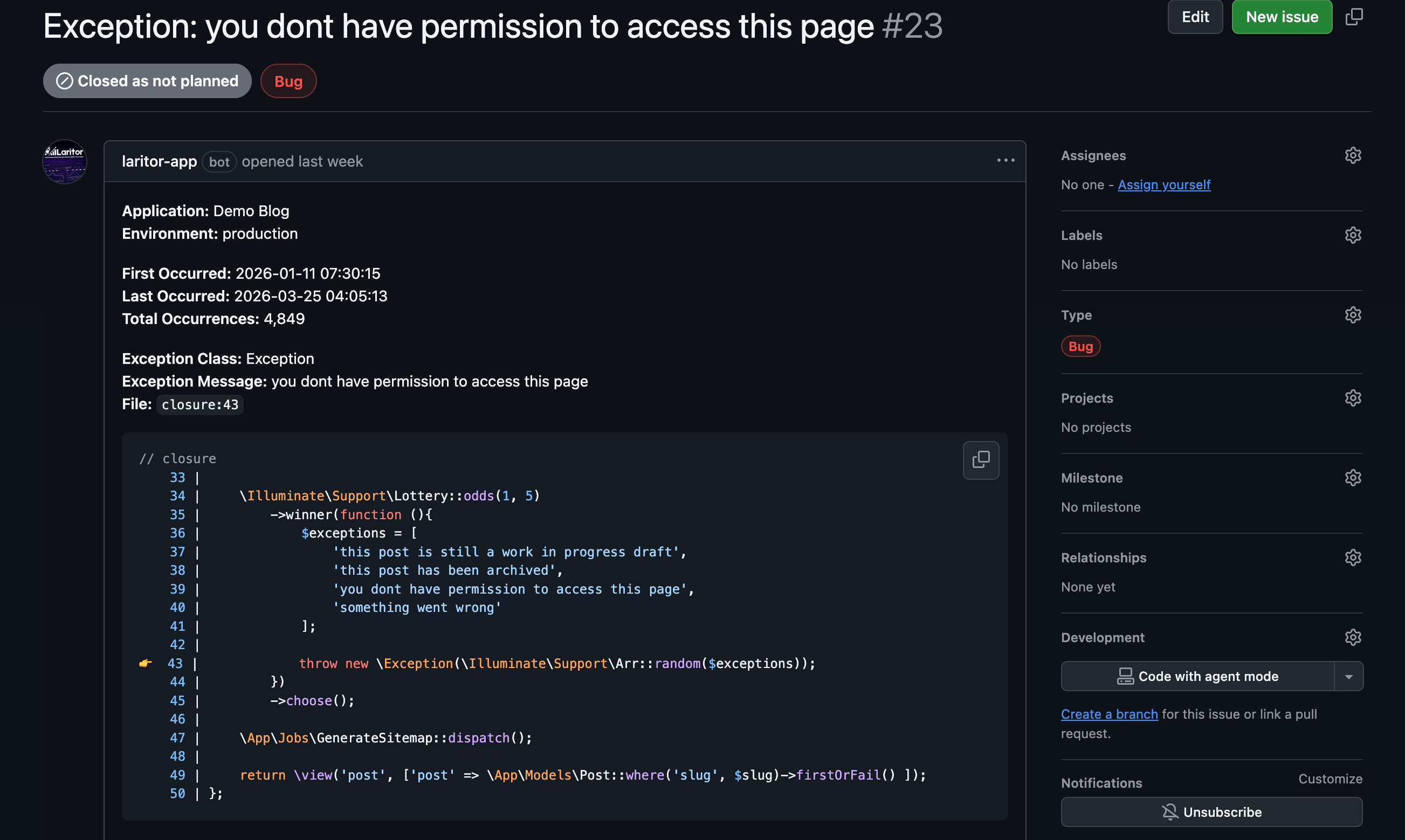
Laritor lets you connect your GitHub account so alerts can create GitHub issues in the repository you choose. This helps your team turn production problems into tracked work items without leaving Laritor.
🔧 How to Integrate GitHub
Section titled “🔧 How to Integrate GitHub”-
Open Settings
- Click your profile dropdown in the top-right corner of the dashboard.
- Select Settings from the dropdown.
-
Start GitHub Integration
- On the Settings page, go to the Integrations section.
- Click the Integrate GitHub button.
-
Authorize Laritor
- You will be redirected to the GitHub authorization screen.
- Sign in to GitHub if needed.
- Authorize Laritor to access your GitHub account and repositories.
-
Return to Laritor
- Once authorization is complete, you will be redirected back to the Settings page.
- If successful, you’ll see a confirmation message: ✅ GitHub integrated successfully
📣 Using GitHub in Alerts
Section titled “📣 Using GitHub in Alerts”Once GitHub is integrated, you can choose which repository should receive GitHub issues from the Alerts page.
Configure GitHub Repositories for Alerts
Section titled “Configure GitHub Repositories for Alerts”-
Go to Alerts
- Click Alerts in the main navigation menu.
-
Choose Your Repository
- Under Alerts, select the GitHub repository where you want Laritor to create issues.
-
Set a Default or Environment-Specific Repository
- You can choose a default GitHub repository for all environments.
- You can also override the repository for specific environments when needed.
-
Save Your Alert Configuration
- Save your alert settings after selecting the appropriate repository.
- Laritor will create GitHub issues in the default repository or the environment-specific override you configured.
💡 Notes
Section titled “💡 Notes”- Laritor only requests the permissions needed to create GitHub issues in your selected repositories.
- You can disconnect or reauthorize GitHub at any time via Settings > Integrations.
- You can use one default repository for all environments and override it for specific environments when needed.